
U.S. Duck

Duck meat, a favoured red meat alternative

Duck distinguishes itself from its red meat competitors by its low content of saturated fat and therefore represents a healthier option

Health Benefits

Duck is a healthy, flavorful, and versatile meat offering a variety of different health benefits.

Essential nutrients like protein, iron and selenium are higher in duck meat than in most other meats and poultry. Duck meat is eaten raw, cooked or dried. People all over the world enjoy duck meat for its juicy texture and taste. 

Iron

Duck meat is an excellent source of iron which helps make haemoglobins. Healthy blood keeps us from getting tired.

Fewer Calories

Duck meat is often lower in calories than a variety of other proteins, including chicken, turkey, beef, and pork.

Better Fat

Like olive oil, duck fat is full of monounsaturated fat and low in saturated fat.

Protein

Duck is rich in protein which keeps us healthy by building and repairing our muscles, skin and blood.

B Vitamins

Duck is a good source of B vitamins. It contains a lot of vitamin B3, also called niacin.‌

Omega Fatty Acids

Duck poultry is a great source of short-chain omega-3 fatty acids and omega-6 fats.
High Quality

U.S. ducks are raised indoors. This protects them and helps them be of the highest quality possible.

Producers and consumers alike insist on quality in every step of the process, from growth to processing and distribution, hence, U.S. duck products consistently exceed expectations.

Production

U.S. ducks are raised on nutritious high-protein grains such as soybeans and corn. They are naturally bred and fed without compromising the flavour. They yield a high percentage of tasty, nutritious meat without the use of artificial ingredients or added hormones.

Safety

The USDA, like chicken and turkey, federally inspects ducks. The first inspection phase starts with the live bird and continues throughout the slaughter, processing, and packaging phases. Every poultry processing line in America is supervised by one to three food safety inspectors.

Packaging & distribution

Temperature is carefully monitored and maintained throughout the shipping, processing, and handling process. After slaughter, ducks are ready either for the market as a whole bird or for further processing. They are shipped in domestic markets and overseas in climate-controlled containers.

High Standards

The USDA has the strictest inspection standards in the world for all phases of poultry processing. They work closely with the plants that slaughter and process U.S. ducks. This collaboration allows the member companies to exceed the existing high-quality standards set by the U.S. Department of Agriculture.

Classifications

Major duck breeds raised in the U.S.

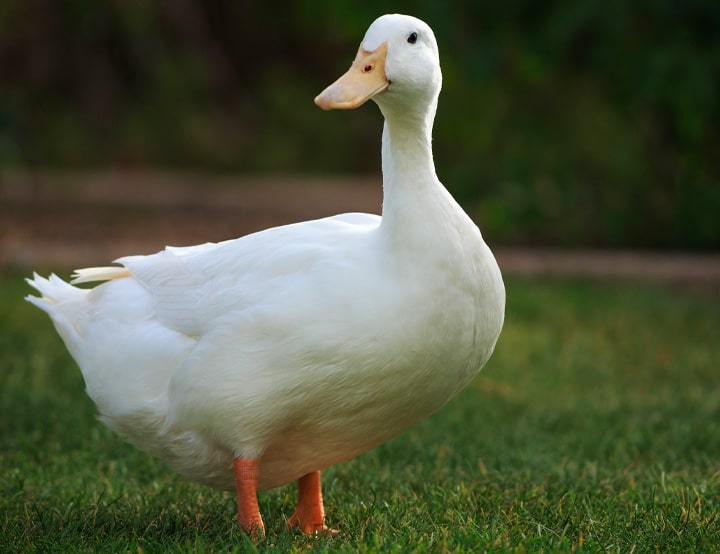
The most common breed used in food is the white Pekin duck, but in the US you can also find the Muscovy, Mallard, and Moulard. The Muscovy and Moulard breeds are occasionally served in restaurants, while the Mallard is generally considered a game bird. 

Pekin White

White Pekin accounts for 95% of duck consumption in the United States. White Pekin Duck suits most flavour profiles with its tender, mild meat, which is preferred by most consumers. In addition, it has less fat and more protein than other breeds.

Mallard

The Mallard Duck is primarily found in the wild but is raised on farms on a limited basis. It is smaller and tougher than the White Pekin, and it is usually consumed only as game meat after sport hunting.

Muscovy

The appearance and taste of the Muscovy duck differ by gender. Males are large and meaty, while females are small. Muscovy duck has a much stronger flavour and is often bought for its breast or liver, which are used to prepare foie gras.

Moulard

The Moulard duck is a cross between a male Muscovy duck and a female White Pekin. The Moulard is larger and has a stronger and juicier flavour than the White Pekin. Like Muscovy duck, Moulard is often used for foie gras.

Are you a Chef Store Retailer Food Distributor Food Processor ?

Take your business to the next level. Learn more about U.S. duck products.